
If you have ever wondered how do sleeping pills work, the answer depends on the type of medicine. Sleeping pills, also called hypnotics or sleep medicines, are designed to make it easier to fall asleep, stay asleep, or both. They generally affect chemical signals in the brain involved in alertness, relaxation, or the sleep-wake cycle. Some medicines reduce brain activity and promote drowsiness, while others influence specific sleep-related pathways. Prescription options include several different drug classes, including benzodiazepines, benzodiazepine-receptor agonists, melatonin-receptor agonists, and orexin-receptor antagonists. Because insomnia can have many causes, the appropriate treatment depends on the person’s symptoms, medical history, other medicines, and the duration of the sleep problem.
That’s why the NHS recommends that we get between six and nine hours of sleep a night
In the study conducted by the Sleep Foundation, about half of the participants stated that they felt sleepy at least three times a day. As the same study notes, this can influence mood, brain sharpness and everyday functioning.
60% of respondents in a 2026 UK study were found to suffer from sleeplessness. Taking care of our health means finding ways to encourage appropriate sleeping patterns, and for some people, that includes sleeping medications.
How Sleeping Pills Affect the Brain
Sedative and GABA-Based Sleeping Medicines
Some sleep medicines work by increasing the effects of gamma-aminobutyric acid, commonly called GABA, a chemical messenger that reduces activity in the brain. Benzodiazepines bind to GABA receptors and can produce calming and drowsiness effects. Certain non-benzodiazepine sleep medicines, often called Z-drugs, also reduce brain activity and are prescribed for insomnia. This can help reduce the alertness that keeps someone awake at bedtime. Depending on the medicine, these effects may help with sleep onset, sleep maintenance, or both. However, these medicines can also cause unwanted effects such as daytime drowsiness, dizziness, impaired coordination, or slowed reactions. Know more about how to get prescription sleeping pills online in the USA, UK, and Europe.
Melatonin and the Sleep-Wake Cycle
Other sleep medicines act on melatonin pathways. Melatonin is a hormone involved in regulating the body’s circadian rhythm, which helps coordinate the sleep-wake cycle with the light-dark cycle. Melatonin-receptor medicines are designed to influence this system rather than simply producing strong sedation. This distinction matters because not every sleep problem results from the same biological mechanism. Someone whose main problem involves their body clock may have different treatment considerations from someone who repeatedly wakes during the night.
Orexin Receptor Antagonists
Orexin is a brain signalling system involved in maintaining wakefulness. Antagonists work by blocking orexin signalling, which can reduce wake-promoting activity and help support sleep. The American Academy of Sleep Medicine includes orexin receptor antagonists among established pharmacological approaches for chronic insomnia. These medicines demonstrate that modern sleep treatment is not based on one single mechanism: different medications target different pathways associated with sleep and wakefulness.
What Are Sleeping Pills Used For?
Sleeping pills are primarily used to manage insomnia symptoms, particularly difficulty falling asleep or difficulty staying asleep. Some medicines are more closely associated with sleep-onset problems, while others have evidence for sleep-maintenance insomnia. Clinical guidance evaluates medicines according to these different insomnia patterns rather than treating all sleep problems as identical. Sleep medicines may sometimes be considered when insomnia is persistent, when behavioural treatment alone has not provided enough improvement, or when a clinician believes short-term medication could be useful alongside other treatment. The American Academy of Sleep Medicine states that medication decisions should consider the individual circumstances of the patient, and its guidance places behavioural treatment such as cognitive behavioural therapy for insomnia, or CBT-I, within the overall treatment approach.
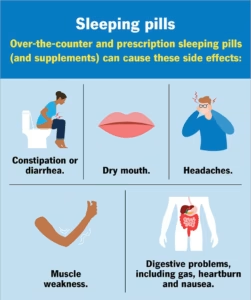
What Effects Can Sleeping Pills Cause?
The intended effect of a sleeping pill is usually increased sleepiness and improved ability to sleep. However, the effects can vary considerably between medicines and individuals. Some people may experience next-day drowsiness, dizziness, reduced alertness, headache, or problems with coordination. Certain prescription sleep medicines can also cause unusual behaviours while not fully awake. The U.S. Food and Drug Administration has warned about complex sleep behaviours associated with certain Z-drugs, including activities such as sleepwalking, driving, or other actions performed while partially asleep. These events can result in serious injury and, rarely, death. This is why taking a sleep medicine exactly as prescribed and discussing unusual reactions with a healthcare professional is important.
Sleeping Pills Safety: What Should You Know?
Avoid Unsafe Combinations
One of the most important safety considerations is combining sleep medicines with other substances that can cause sedation. Benzodiazepines, for example, can cause slowed breathing, and the FDA highlights risks associated with their use. Combining sedating medicines with alcohol, opioids, or other central nervous system depressants can increase risks and should only be considered when specifically directed by a qualified healthcare professional. Never increase a prescribed dose because you feel that the medicine is not working quickly enough.
Long-Term Use Requires Medical Guidance
Sleeping pills are not appropriate for everyone or every type of insomnia. Some medicines can lead to tolerance, dependence, withdrawal symptoms, or other complications when used improperly or for longer than intended. The risks vary substantially according to the medicine, dose, duration, age, health conditions, and other medications being taken. For persistent insomnia, identifying underlying contributors such as stress, irregular sleep schedules, other medical conditions, or sleep disorders can be just as important as treating the immediate symptom.
Are Sleeping Pills the Only Treatment for Insomnia?
No. Medication is only one part of insomnia management. CBT-I uses structured behavioural and psychological techniques to address patterns that contribute to chronic insomnia. The AASM identifies behavioural and psychological treatments as an important part of evidence-based insomnia care and notes that sleep hygiene alone should not be considered a complete treatment for chronic insomnia. Improving sleep routines, maintaining a consistent schedule, reducing stimulating activities before bedtime, and addressing underlying causes may also form part of a broader treatment plan.
Final Thoughts on How Sleeping Pills Work
Understanding how sleeping pills work can help explain why different medicines are used for different sleep problems. Some reduce brain activity through GABA-related pathways, some influence melatonin signalling, and others reduce wake-promoting orexin activity. Although these medicines can help certain people sleep, they also have potential side effects and safety risks. The right approach depends on the individual’s symptoms, health history, medications, and clinical needs. If ongoing difficulty falling asleep or staying asleep is affecting your daily life, speak with a qualified healthcare professional before starting, stopping, or changing a sleep medicine.
For more information about insomnia and sleep medicines, visit Spuk Sleeping Pills, their effects, and safer sleep strategies; continue exploring our sleep-health guides; and take the next step toward better-informed sleep care.